 Surface & Stone
What is the difference?
Granite is natural stone, cut from a quarry and polished. Every slab is different. Zimbabwe is known for its black granite, quarried around Mutoko, which is why granite is such a familiar sight in kitchens here.
Quartz is engineered stone: crushed natural quartz bound with resin into slabs. Because it is made in a factory, the colour and pattern are consistent from slab to slab. It is generally imported.
Heat
Granite handles heat very well. Quartz is less forgiving: the resin can scorch or discolour if a hot pot goes straight onto it. With quartz, always use a trivet or board.
Stains and upkeep
Quartz is non-porous, so it does not need sealing and resists stains from oil, wine and tea. Granite is porous to varying degrees: it should be sealed when it is fitted and resealed from time to time. Dense dark granites absorb very little.
Looks
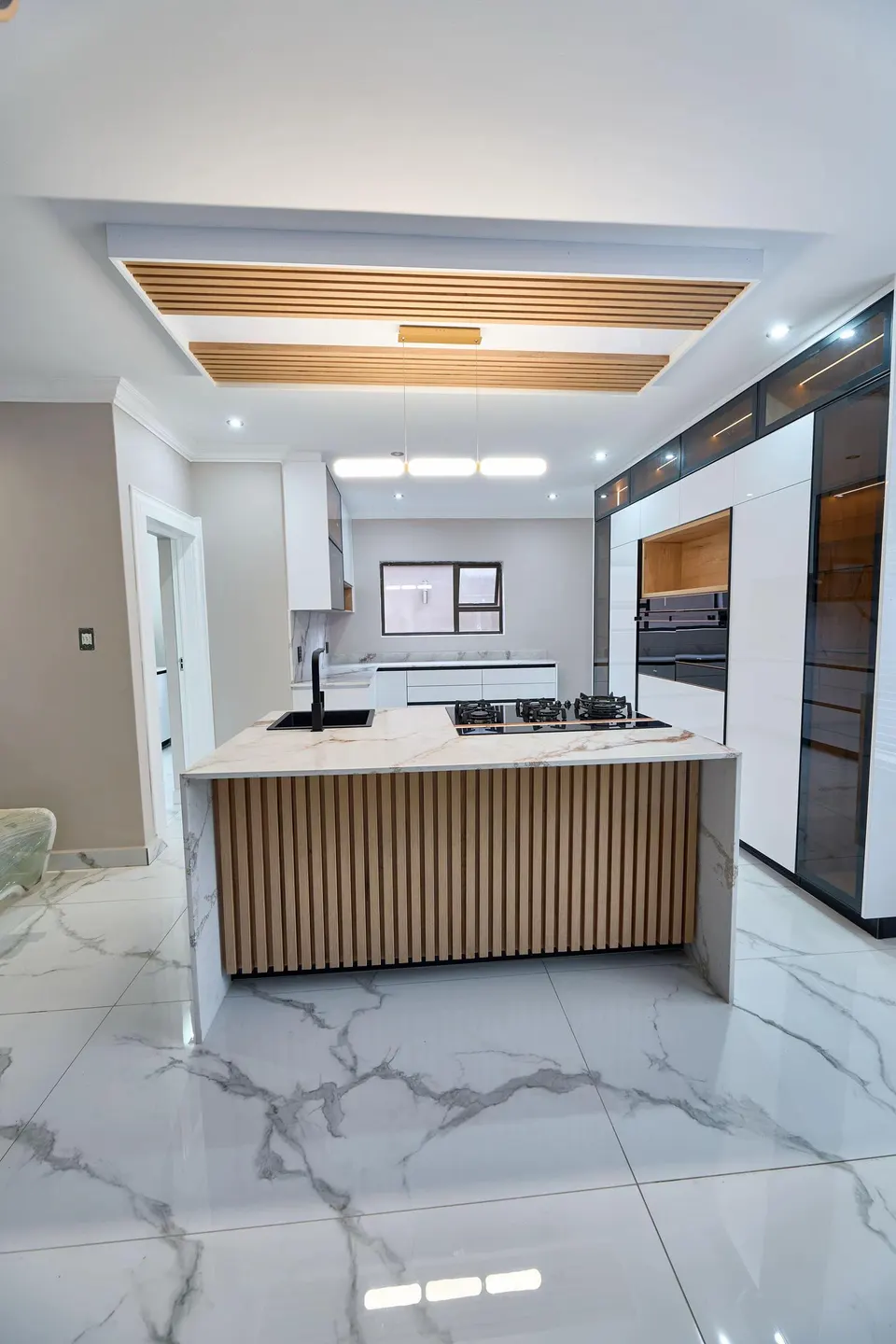
Choose granite if you want natural stone with its own pattern. Choose quartz if you want a uniform colour, such as a clean white or a marble look, that matches across a long run or an island.
Sunlight
Granite is fine in direct sun. The resin in quartz can fade or yellow over years of strong direct sunlight, so for an outdoor kitchen, a braai area or a counter in full sun, granite is the safer choice.
Quick comparison
- Heat: granite better.
- Stains: quartz better (no sealing needed).
- Pattern: granite is unique per slab; quartz is consistent.
- Outdoors or in full sun: granite.
- Sourcing: granite is quarried in Zimbabwe; quartz is mostly imported.
We also fit engineered stone, solid surface and laminate tops if you are working to a tighter budget. We help you choose at the site visit based on budget, look and how hard your kitchen works. See our kitchens.
Talk to us about your kitchens. A site visit anywhere in Zimbabwe to measure up, a written quote, and a 3D design before we build.